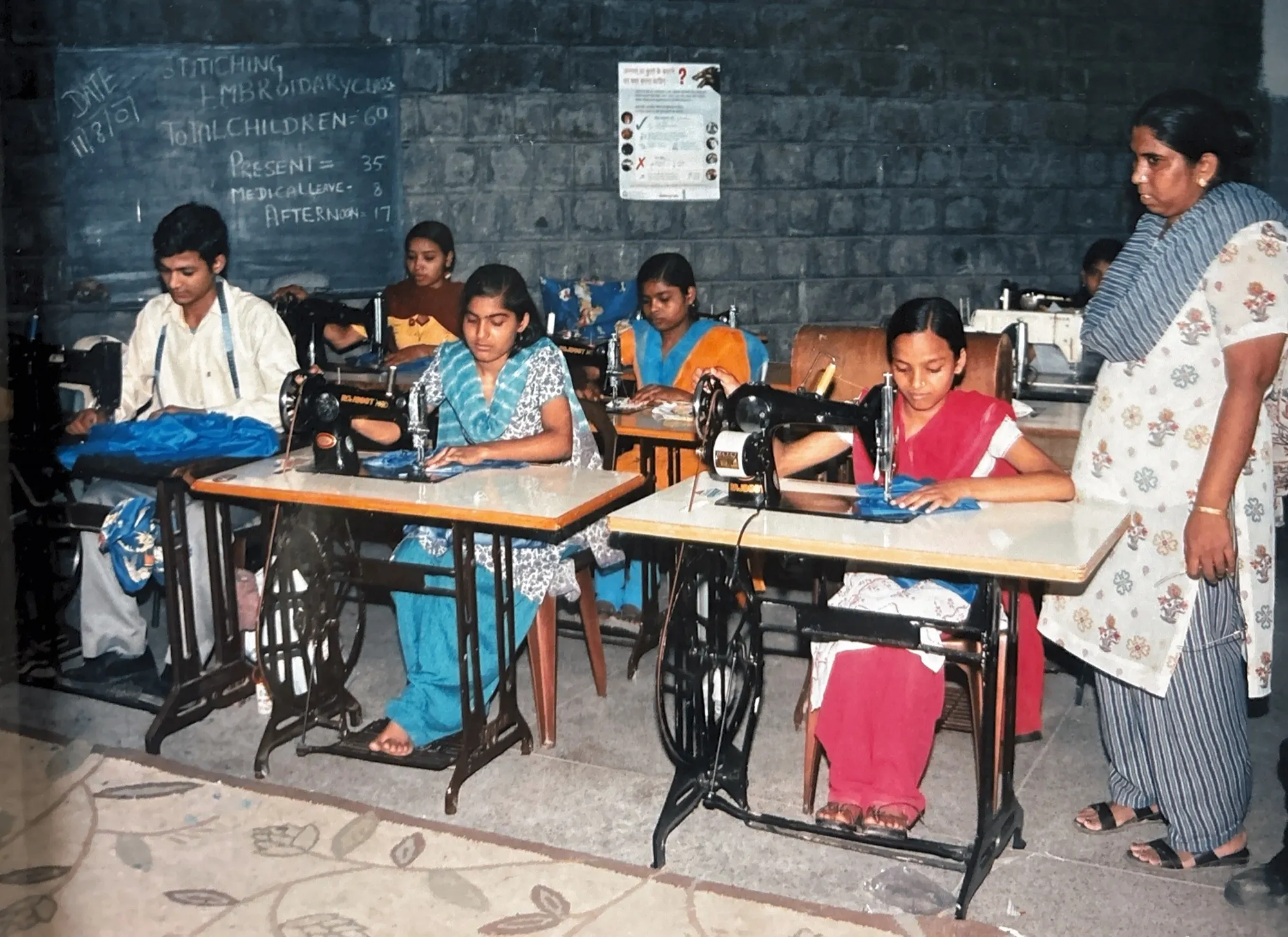
A woman learning to sew is not the story. The story is what happens in the next twelve months: whether she gets a machine, a first customer, a way to price her work, and enough confidence to say no to a marriage she did not choose.
India's women are working in greater numbers. The government's Periodic Labour Force Survey puts the female labour force participation rate at 41.7% in 2023-24, up from 23.3% in 2017-18. Rural women are at 47.6%; urban women at 28.0%. A 2026 UNFPA India analysis of the same data adds the caution that the rise is concentrated in informal, self-employed and unpaid work. Counting more women as workers is not the same as paying them well.
That gap is where women's skill training programmes earn their keep. A good one does not only teach a trade. It connects the trade to an income. This post looks at how that works in practice, using the Saheli projects run by the U & N Foundation (UNF), a Saket-based NGO in New Delhi, with the Delhi Council for Child Welfare (DCCW).
What a skill training programme needs to include
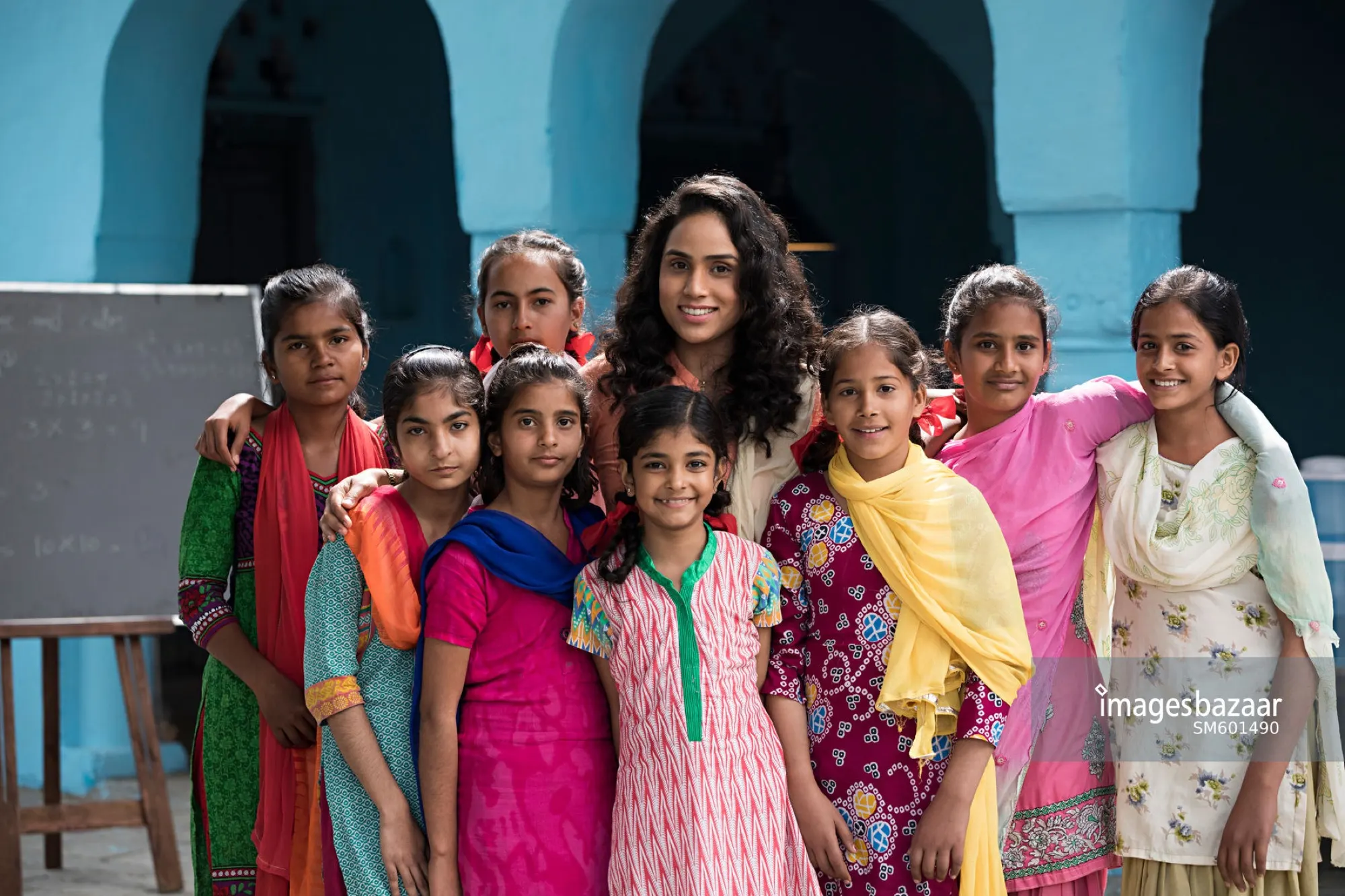
UNF describes its vocational programme with DCCW as aimed at underprivileged girls from resettlement colonies and urban slums in Delhi. Read the project pages closely and four design choices stand out.
- A recognised qualification. The courses run across 13 centres and are accredited by NIOS and JSS, which UNF says qualifies participants for government jobs.
- A trade that fits real life. The courses were chosen so girls can work after marriage without large investments. Sewing, embroidery and typing typically need a table and a few tools, not a shopfront.
- Confidence alongside craft. Sessions in English speaking, confidence-building and self-defence run next to the vocational training.
- Start-up help. UNF says it provided set-up equipment and funding to girls who wanted to start their own ventures.
UNF also reports that the programme delayed the average age of marriage from 16 to 23 years, with girls choosing to prove themselves rather than marry under economic pressure. That figure is UNF's own, taken from its project pages, and not an independent evaluation. It is still the right outcome to watch: a skill matters most when it gives a young woman a real alternative.
Why a trade alone is not enough
Picture two women who finish the same tailoring course. One goes home to a family that treats her as a pair of free hands. The other has a machine, a few orders from neighbours and someone who checks in on her. A year later they are not in the same place, and the course did not cause the difference.
That is why the Saheli projects pair training with equipment and funding for those who want to start out, and why UNF's women's projects keep adding pieces around the trade: financial literacy, self-help groups, microfinance, personality workshops. The urban figure in the labour data above (28.0%) hints at the same problem from the other side. Many women are not even looking for paid work, and a training centre alone will not change that. Families, transport, safety and childcare decide a lot.
The Saheli projects, trade by trade
"Saheli" means a woman's close friend. Each project teaches one trade, under the same DCCW partnership.
Silai Saheli: sewing
Silai Saheli trains girls in sewing. Its featured story is Leela's Suits. Leela, burdened by economic hardship, used UNF's financial support to buy fabric and equipment and set up a small home-based sewing unit. The story says she "not only supported her family but also provided employment and skills training to other women in her family, creating a ripple effect of empowerment." One skilled woman became a small employer.
Kadhai Saheli: embroidery
Kadhai Saheli covers embroidery. It sits under the same model as the other courses: a skill that lets girls earn after marriage without a large investment, plus the English, confidence and self-defence sessions. Its featured story is about Sameera, who is mute and deaf and whose paintings spoke for her at the training camp.
Bunaai Saheli: weaving
Bunaai Saheli teaches weaving. Poonam, a member of the Tharu tribe, already knew how to weave grass into small baskets. Training widened her range to containers, stationery and home decor, and added business management. UNF's story says the project "wasn't just about skill enhancement; it was a canvas for self-discovery and entrepreneurial growth" (Crafting Dreams: A Tale of Tribal Empowerment). The lesson: good programmes build on skills women already have.
Abhushan Saheli: jewellery making
Abhushan Saheli teaches jewellery making. Meenu, married young, a survivor of domestic abuse and disowned by her family, found refuge with DCCW. The story describes jewellery making as "a form of therapeutic expression" that grew into income from selling her handmade pieces (From Sheltered to Self-Sufficient).
Shobha Saheli: beauty culture
Shobha Saheli trains girls in beauty culture. Aisha, who lives with a disability, completed the course and now works at a local salon in her community. UNF writes that her story shows "everyone, regardless of their abilities, deserves the chance to shine" (Breaking Barriers, Illuminating Dreams).
Typing Saheli: typing and shorthand
Typing Saheli is the office-job route. Neelima, from a modest background, learned shorthand typing and landed a job at a local printing shop. In the words of her story: "As her typing speed increased, so did her confidence" (Mastering the Keys).
Aahar Saheli: food and nutrition
Aahar Saheli covers food and nutrition. Its featured participant, Ravika, learned to prioritise healthy food for her children. A skill programme can pay off at home before it pays off in income.
Beyond DCCW: other routes to women's livelihoods
Not every woman can join a centre-based course. UNF's other women-focused projects fill different gaps.
- Wings for Her, with Shri Shani Dham Trust, offers workshops in embroidery, traditional dressmaking and screen printing. It provides sewing machines and materials, financial help for women entrepreneurs, and personality workshops covering self-defence, computer education and driving.
- Abadha Narya Vikas, with the Abadha Foundation, targets rural women through financial literacy, self-help group counselling, microfinance and capacity-building support.
- Project Vikas, with the Raginiben Bipinchandra Trust, includes skill-building workshops and vocational training. Kritika, discouraged by social norms from sewing as a career, started a sewing practice from her home after its workshops (Stitching Dreams).
You can browse the full set on UNF's Women Empowerment and Skill Building pages.
How to judge a women's livelihood programme
This is general guidance, not a UNF claim. When you assess any programme before donating, volunteering or enrolling, ask:
- What happens after the certificate? If there is no link to tools, customers or jobs, the training stops at the classroom door.
- Is the trade sellable locally? A course that ends with a product nobody nearby buys is a hobby class.
- Is there a plan for the soft skills? Negotiating a price, speaking to a customer and handling money are part of the trade.
- Does the programme follow women over time? One-off training and a three-year relationship produce different results.
- Does it say what it cannot yet prove? Honest programmes separate their own reported outcomes from evaluated ones.
How you can help
UNF works with partner NGOs and welcomes volunteers. Read more beneficiary accounts on the success stories page, or see how to volunteer with UNF. To ask about the programmes, write to info@unf.in or visit the contact page.
Frequently asked questions
What is a women's skill training programme?
It is a structured course that teaches women a marketable trade, such as sewing, embroidery, weaving, jewellery making, beauty culture or typing. The better programmes add confidence-building, accreditation and help with tools or funding so the skill leads to income.
Which skills does UNF teach through its Saheli projects?
UNF's Saheli projects with the Delhi Council for Child Welfare cover sewing (Silai), embroidery (Kadhai), weaving (Bunaai), jewellery making (Abhushan), beauty culture (Shobha), typing (Typing) and food and nutrition (Aahar).
Are UNF's skill courses accredited?
UNF's project pages say the courses are accredited by NIOS and JSS and that they qualify participants for government jobs. They are run across 13 centres in Delhi.
Do women get help starting their own business after training?
UNF says it provided set-up equipment and funding to aspiring entrepreneurs among the participants. Wings for Her also provides sewing machines, materials and financial assistance to women entrepreneurs.
How can I volunteer or support UNF's women's programmes?
Email info@unf.in or see the volunteer page at unf.in/volunteer-with-us/. UNF also publishes a contact page with its Saket address and phone number.
Sources
Be part of the work
Volunteer, partner or support a project with U & N Foundation.